Showing posts with label article. Show all posts
Showing posts with label article. Show all posts
Monday, September 10, 2012
evaporated cane juice is still the same as sugar, it's just not quite as refined
Here is the nutrition panel. Taking this pic brought to mind how often I see evaporated cane juice in the ingredients of "healthier" foods. It's important to note that evaporated cane juice is still the same as sugar, it's just not quite as refined. It has trace amounts of vitamins and minerals, where white sugar is stripped, but I'd hardly call it a health food. The nice thing about it is that because it tends to be sweeter than white sugar, it takes less to sweeten a product.

Monday, August 20, 2012
Your BMI Suggests You Are a Healthy Weight
While your results look good, keep in mind that it’s wise to review your BMI in light of your gender and age. Studies show, for instance, that people 65 and older may benefit from a slightly higher BMI — of between 25 and 27 — than the range indicated above. Also, the recommended amount of body fat differs for men and women.
 For women, a BMI showing body fat of 20 percent to 21 percent is considered ideal. (The average American woman has about 22 percent to 25 percent body fat.)
For men, the recommended amount of body fat is between 13 percent and 17 percent. (The average American man has approximately 17 percent to 19 percent body fat.)
One way to determine your desirable body weight is to use the following formula:
Being physically active and eating a balanced diet can help you maintain your healthy weight. Some tips:
Your BMI is an estimate of your body fat based on your weight and height.
For men, the recommended amount of body fat is between 13 percent and 17 percent. (The average American man has approximately 17 percent to 19 percent body fat.)
One way to determine your desirable body weight is to use the following formula:
Women: 100 pounds of body weight for the first five feet of height plus five pounds for each additional inch.
Men: 106 pounds of body weight for the first five feet of height plus six pounds for each additional inch.But if you have a small body frame, you should subtract 10 percent from that number. For a large frame, 10 percent should be added.
Being physically active and eating a balanced diet can help you maintain your healthy weight. Some tips:
- Limit red meat: A good habit to get into is to eat meat no more than once a day.
- Eat fish and poultry: Both are less fattening than red meats and processed meats.
- Avoid fried food: Bake or broil your food — it’s much healthier. If you do fry foods, use polyunsaturated oils, such as safflower, sunflower or corn oil.
- Reduce your sodium intake: Limit your use of table salt and flavor intensifiers that contain salt, such as monosodium glutamate (MSG).
- Eat fiber: Healthy fiber is found in green leafy vegetables, fruit, beans, bran flakes, nuts, root vegetables, and whole-grain foods.
- Count your eggs: Eggs are a good source of protein, and they're low in saturated fat. But they’re also high in cholesterol, so it's best to avoid eating more than four eggs per week.
- Snack smart: Choose fresh fruit for dessert, rather than cookies, cake or other sweets.
- Eat a balanced diet: Follow the recommendations of the food guide pyramid.
Friday, July 6, 2012
Food Rules by Michael Pollan
1. Eat Food
2. Don't eat anything your great-grandmother wouldn't recognize as food
3. Avoid food products containing ingredients no ordinary human would keep in the panrty
Cellulose? Ammonium sulfate?
4. Avoid high-fructose corn syrup
5. Avoid foods that have some form of sugar (or sweetener) listed among the top three ingredients
There are 40 types of sugar used in processed food, barley matl, beet sugar, brown rice syrup,
dextrin, turbinado sugar, glucose, etc... SUGAR IS SUGAR
6. Avoid food products that contain more than 5 ingredients.
7. Avoid food products containing ingredients a child cannot pronounce.
8. Avoid food products that make health claims.
It's the products of modern food science that make the boldest health claims, often founded on
incomplete and often bad science.
The healthiest food at the market- the fresh produce- doesn't boast about it's healthfulness, because
growers don't have the budget or the packaging.
11. Avoid foods you see advertised on television
13. Eat only foods that will eventually rot
14. Eat foods made from ingredients that you can picture in their raw state or growing in nature.
15. Get out of the supermarket whenever you can, go to the farmers' market.
17. Eat only foods that have been cooked by humans.
18. Don't ingest foods made in places where everyone is required to wear a surgical cap
19. If it came from a plant, eat it; if it was made in a plant, don't.
20. It's not food if it arrived through the window of your car.
21. It's not food if it's called by the same name in every language. (Big Mac, Cheetos, Pringles)
22. EAT MOSTLY PLANTS, ESPECIALLY LEAVES.
23. Treat meat as a flavoring or special occasion food.
(a couple times a week is healthiest)
25, Eat several different colors
Which will reflect different antioxidant phytochemicals.
27. Eat animals that have themselves eaten well.
Eat well-grown food from healthy soil
28. Eat some foods that have been predigested by bacteria or fungi.
(exp. yogurt, sauerkraut, soy sauce, sourdough bread- good sources of vitamin B12)
34. Sweeten and salt food yourself.
35. eat sweet foods as you find them in nature
36. Don't eat breakfast cereal that change the color of the milk.
37. "The whiter the bread, the sooner you'll be dead."
41. Eat like the French, Japanese, Italians, Greeks-
People who eat according to the rules of a traditional food culture are generally healthier than
those of us eating a moern Western diet of processed foods.
HOW should I eat?
44. Pay more, eat less... Eat Less
You get what you pay for.
46. Stop eating before you are full
The Japanese say to stop when you are 80% full
"A full belly is 1/3 food, 1/3 liquid, 1/3 air."
47. Eat when you're hungry, not when you are bored.
48. Consult your gut, not your American Jumbo Size to determine how much you eat.
49. Eat slowly.
50. "the banquet is in the first bite." No other bite will taste as good.
51. Spend as much time enjoying the meal as it took to prepare it
53. SERVE A PROPER PORTION AND DO NOT GO BACK FOR SECONDS!
54. "Breakfast like a king, lunch like a prince, dinner like a pauper."
56. Limit your snacks to unprocessed plant food.
57. Don't get your fuel from the same place your car does.
Do not eat food from a gas station.
58. Do all your eating at a table.
59. Try not to eat alone.
60. Treat treats as treats.
Start making special occasion foods yourself. If you bake your own dessert, fry your own chicken, you wont go to that much trouble every day. Sense of occasion needs to be restored.
61. Leave something on your plate.
"Better to go to waste than to waist." or "Leave something for Mr. Manners"
Practice not cleaning your plate; it will help you eat less in the short term and develop self-control in
the long term.
63. Plant a vegetable garden or a window box. Cook with it.
64. Break the rules once in a while.
2. Don't eat anything your great-grandmother wouldn't recognize as food
3. Avoid food products containing ingredients no ordinary human would keep in the panrty
Cellulose? Ammonium sulfate?
4. Avoid high-fructose corn syrup
5. Avoid foods that have some form of sugar (or sweetener) listed among the top three ingredients
There are 40 types of sugar used in processed food, barley matl, beet sugar, brown rice syrup,
dextrin, turbinado sugar, glucose, etc... SUGAR IS SUGAR
6. Avoid food products that contain more than 5 ingredients.
7. Avoid food products containing ingredients a child cannot pronounce.
8. Avoid food products that make health claims.
It's the products of modern food science that make the boldest health claims, often founded on
incomplete and often bad science.
The healthiest food at the market- the fresh produce- doesn't boast about it's healthfulness, because
growers don't have the budget or the packaging.
11. Avoid foods you see advertised on television
13. Eat only foods that will eventually rot
14. Eat foods made from ingredients that you can picture in their raw state or growing in nature.
15. Get out of the supermarket whenever you can, go to the farmers' market.
17. Eat only foods that have been cooked by humans.
18. Don't ingest foods made in places where everyone is required to wear a surgical cap
19. If it came from a plant, eat it; if it was made in a plant, don't.
20. It's not food if it arrived through the window of your car.
21. It's not food if it's called by the same name in every language. (Big Mac, Cheetos, Pringles)
22. EAT MOSTLY PLANTS, ESPECIALLY LEAVES.
23. Treat meat as a flavoring or special occasion food.
(a couple times a week is healthiest)
25, Eat several different colors
Which will reflect different antioxidant phytochemicals.
27. Eat animals that have themselves eaten well.
Eat well-grown food from healthy soil
28. Eat some foods that have been predigested by bacteria or fungi.
(exp. yogurt, sauerkraut, soy sauce, sourdough bread- good sources of vitamin B12)
34. Sweeten and salt food yourself.
35. eat sweet foods as you find them in nature
36. Don't eat breakfast cereal that change the color of the milk.
37. "The whiter the bread, the sooner you'll be dead."
41. Eat like the French, Japanese, Italians, Greeks-
People who eat according to the rules of a traditional food culture are generally healthier than
those of us eating a moern Western diet of processed foods.
HOW should I eat?
44. Pay more, eat less... Eat Less
You get what you pay for.
46. Stop eating before you are full
The Japanese say to stop when you are 80% full
"A full belly is 1/3 food, 1/3 liquid, 1/3 air."
47. Eat when you're hungry, not when you are bored.
48. Consult your gut, not your American Jumbo Size to determine how much you eat.
49. Eat slowly.
50. "the banquet is in the first bite." No other bite will taste as good.
51. Spend as much time enjoying the meal as it took to prepare it
53. SERVE A PROPER PORTION AND DO NOT GO BACK FOR SECONDS!
54. "Breakfast like a king, lunch like a prince, dinner like a pauper."
56. Limit your snacks to unprocessed plant food.
57. Don't get your fuel from the same place your car does.
Do not eat food from a gas station.
58. Do all your eating at a table.
59. Try not to eat alone.
60. Treat treats as treats.
Start making special occasion foods yourself. If you bake your own dessert, fry your own chicken, you wont go to that much trouble every day. Sense of occasion needs to be restored.
61. Leave something on your plate.
"Better to go to waste than to waist." or "Leave something for Mr. Manners"
Practice not cleaning your plate; it will help you eat less in the short term and develop self-control in
the long term.
63. Plant a vegetable garden or a window box. Cook with it.
64. Break the rules once in a while.
Thursday, May 3, 2012
Flour Characteristics
CHARACTERISTICS | GLUTEN | |
|---|---|---|
| AMARANTH | A strong, spicy, nutty-flavored flour. Best used as an accent flour in waffles, pancakes, cookies or muffins. | None |
| BRAN (UNPROCESSED) | The outer layer of the wheat berry. Add small amounts to cereals and baked goods to increase fiber. Keep refrigerated. | High |
| BUCKWHEAT | The edible fruit seed of a plant related to rhubarb. It is not related to wheat or other grains. High proportion of essential amino acids; close to being a complete protein. Commonly combined with wheat flour in pancakes, waffles, blintzes and pastas. | Low |
| CORNMEAL (BLUE) | Higher in protein than yellow cornmeal. Turns lavender in color when cooked. Use in muffins and corn tortillas. Kids love purple pancakes! | None |
| CORNMEAL (YELLOW) | Rich and buttery in flavor. Use for polenta, cornbread and muffins. | None |
| GLUTEN | Gluten flour is white flour mixed with concentrated wheat protein. Add to bread dough to increase rise: 2 tablespoons per cup of flour in whole grain bread; 1 tablespoon plus 1 teaspoon per cup of flour in white breads. Also add to breads with extra bran, raisins or nuts. Increase kneading time to activate extra gluten. | High |
| GRAHAM | Hard whole wheat flour with a course and flaky outer bran layer, and finely ground germ. Most famously used in crackers, but adds texture and nutty flavor to all baked goods. | Low |
| OAT BRAN | Contains soluble fiber, which can help lower blood cholesterol levels when eaten as part of a lowcholesterol diet. Add oat bran to muffins or breads. Use as a coating for chicken and seafood. | Low |
| RYE FLOUR | Yields baked goods that are moist and dense. Combine with caraway seeds in crackers and breads. Due to its low-gluten content, it is often mixed with whole wheat flour to increase its rising ability. | Low |
| SEMOLINA | Durum flour with the bran and germ removed. Never bleached. Used to make high-quality "white"pasta. Adds extra flavor and texture in some bread recipes. | High |
| SOY | High in protein, it is often used as a protein booster. Usually combined with whole wheat flour to increase its rising ability. | None |
| SPELT | An ancient grain gaining popularity today as a wheat substitute. Similar to high-protein wheat. If substituting for wheat in a recipe, reduce the liquid by 25%. | Low |
| TEFF | Rich in calcium, protein and iron; sweet malty flavor. Use in quick breads, pancakes and waffles. Use to thicken stews, soups and sauces. Teff is a major crop in Ethiopia, where the flour is used to make the typical spongy flatbread injera. | None |
| WHEAT GERM | Vitamin- and mineral-rich layer of the wheat berry. Excellent source of vitamin E. Available toasted and untoasted. Add to cereals, pancakes and baked goods, as well as meat or vegetable loaves. Refrigerate to prevent rancidity. | High |
| WHOLE DURUM WHEAT | From very high protein wheat with less starch than other wheat flours. Makes a tough dough that can stretch and expand — perfect for whole grain pasta. Nutritional profile similar to whole wheat. | High |
| WHOLE WHEAT | Ground from entire wheat berry. Full-bodied flavor and coarse texture. Generally produces baked goods that are denser, with less rise than those made with white flour. Adds rustic, hearty qualities to baked goods. | High |
| WHOLE WHEAT PASTRY FLOUR | Ground from soft wheat berries. Higher in starch and lower in gluten than regular wheat flour. Use in non-yeast baked goods such as cookies, pancakes, muffins, quick breads and cakes. | Medium |
motivational quote + Supplements Article
"In this moment.. Im not in competition w/ anyone but me. All I care about is what I bring to the table...
Im focused on staying hungry & keeping my plate full."
My Top 5 Supplements for a Fit Physique!
Whether you’re like me and have a shelf full of supplements or you are new to supplements altogether, the breadth and depth of supplement options on the market can be very overwhelming. Where do you start? What is really necessary? Having just received an e-mail stating, “Help me!!! What are a few supplements that I should take to support my fit lifestyle?”, I thought I would share my top five supplement essentials for a lean and healthy physique:
1. Multivitamin/mineral: Intense training and periodic calorie restriction makes a high-quality multivitamin a must. Even if we follow a balanced, nutrient-dense diet, we likely still have some gaps to fill, as the demands we place on our bodies deplete us of the micronutrients we need for optimal functioning. When we are depleted of vitamins and minerals, we experience a number of negative effects, including fatigue, lack of mental focus, immunity suppression, hormonal imbalances and slowed metabolism, to name a few.
There are countless multivitamin/mineral formulas on the market offering a variety of benefits to suit almost any goal or life stage. Do some research on what’s out there, and decide what is best for your needs and goals. For instance, if you need metabolic support, make sure the multivitamin/mineral has sufficient levels of iodine, selenium, ferritin, B-12 and zinc. If you want improved training endurance and recovery,Gaspari Nutrition’s Anavite offers a full dose of Beta-Alanine and L- Carnitine L-Tartrate.
If you want to take the guesswork out of what vitamins/minerals you personally need, there are tests likeSpectraCell to determine what you are lacking. I did the SpectraCell blood test a few years ago when I was feeling fatigued all of the time. The results indicated that I was very low in B-12 (levels placed me in the 20% percentile). I temporarily supplemented with high doses of B-12 and my energy returned within a month.
2. Omega-3 Fatty Acids: This powerhouse supplement has been shown to decrease inflammation, support fat metabolism, enhance mood and improve skin hydration. I take an omega-3 fish oil capsule twice daily with a 500mg EPA/250mg DHA ratio. I also supplement with flaxseed oil once or twice daily.
3. Probiotics: Probiotics facilitate proper absorption of nutrients by supporting the digestive system. Specifically, probiotics replace the good bacteria in our guts that are depleted by antibiotic use, stress, hormones, aging and infections, to name a few. When the good bacteria are depleted, our digestion and immunity are compromised. I supplement with probiotics daily to ensure I am getting the most benefit from the foods and supplements I consume and to stave off illness. Probiotics are available as a supplement and in food sources, like Gaspari Nutrition’s Myofusion Probiotic Series Protein Powder.
4. Thermogenic: Thermogenics (or fat burners) are an essential supplement for me when I am trying to shed a little body fat. Thermogenics help to burn more calories by causing the body to create more heat, and because of their stimulant effect, help to decrease hunger and to increase energy. More energy leads to an improved mood, better focus and more intense training. More intense training leads to more calories burned. Currently, I am taking a thermogenic in the morning before cardio (Phenorex or sometimes a generic 200 mg caffeine pill) and again in the afternoon. That said, I’m always careful to not overstimulatebefore training. Overstimulation can constrict your blood vessels, allowing less blood and nutrients into your muscles, which is counterproductive to your weight training.
5. Protein Powder: Sufficient protein intake is paramount for building muscle and increasing metabolism. Getting in my goal of approximately 170 grams of protein a day with only whole foods can be challenge. This is especially true for individuals on the road a lot or with busy schedules. Thus, utilizing a protein powder for one or two meals a day is extremely helpful. Besides helping me to get in my protein for the day, protein powder satisfies my sweet tooth that could otherwise threaten my fitness goals. For me, it doesn’t get better than a Cinnamon Roll MyoFusion shake.

Other supplements I regularly take: Greens Formula, Glutamine, BCAAs, Pre-workout (Super Pump Max), Calcium/Magnesium/Zinc (most multivitamin/mineral supplements do not have sufficient doses), Iron.
Tips To Get The Most Out Of Your Supplements
• Take supplements in divided doses (2+ times a day), because the intestines cannot absorb the entire day’s nutritional needs at one time and you are not getting the entire benefit from the supplement.
• Unless the directions on the supplement bottle indicate otherwise (e.g. Probiotics), don’t store your supplements in the refrigerator, bathroom or other humid environment. Store them in a cool dark place instead.
• Ideally, fat-soluble vitamins (A, D, E, K) should be taken with a meal containing a little oil or fat.
 Jaime Baird
IFBB Bikini Pro | Team Gaspari Athlete
Twitter: @JaimeBaird
http://www.facebook.com/ifbbjaimebaird
Im focused on staying hungry & keeping my plate full."
My Top 5 Supplements for a Fit Physique!
Whether you’re like me and have a shelf full of supplements or you are new to supplements altogether, the breadth and depth of supplement options on the market can be very overwhelming. Where do you start? What is really necessary? Having just received an e-mail stating, “Help me!!! What are a few supplements that I should take to support my fit lifestyle?”, I thought I would share my top five supplement essentials for a lean and healthy physique:
1. Multivitamin/mineral: Intense training and periodic calorie restriction makes a high-quality multivitamin a must. Even if we follow a balanced, nutrient-dense diet, we likely still have some gaps to fill, as the demands we place on our bodies deplete us of the micronutrients we need for optimal functioning. When we are depleted of vitamins and minerals, we experience a number of negative effects, including fatigue, lack of mental focus, immunity suppression, hormonal imbalances and slowed metabolism, to name a few.
There are countless multivitamin/mineral formulas on the market offering a variety of benefits to suit almost any goal or life stage. Do some research on what’s out there, and decide what is best for your needs and goals. For instance, if you need metabolic support, make sure the multivitamin/mineral has sufficient levels of iodine, selenium, ferritin, B-12 and zinc. If you want improved training endurance and recovery,Gaspari Nutrition’s Anavite offers a full dose of Beta-Alanine and L- Carnitine L-Tartrate.
If you want to take the guesswork out of what vitamins/minerals you personally need, there are tests likeSpectraCell to determine what you are lacking. I did the SpectraCell blood test a few years ago when I was feeling fatigued all of the time. The results indicated that I was very low in B-12 (levels placed me in the 20% percentile). I temporarily supplemented with high doses of B-12 and my energy returned within a month.
2. Omega-3 Fatty Acids: This powerhouse supplement has been shown to decrease inflammation, support fat metabolism, enhance mood and improve skin hydration. I take an omega-3 fish oil capsule twice daily with a 500mg EPA/250mg DHA ratio. I also supplement with flaxseed oil once or twice daily.
3. Probiotics: Probiotics facilitate proper absorption of nutrients by supporting the digestive system. Specifically, probiotics replace the good bacteria in our guts that are depleted by antibiotic use, stress, hormones, aging and infections, to name a few. When the good bacteria are depleted, our digestion and immunity are compromised. I supplement with probiotics daily to ensure I am getting the most benefit from the foods and supplements I consume and to stave off illness. Probiotics are available as a supplement and in food sources, like Gaspari Nutrition’s Myofusion Probiotic Series Protein Powder.
4. Thermogenic: Thermogenics (or fat burners) are an essential supplement for me when I am trying to shed a little body fat. Thermogenics help to burn more calories by causing the body to create more heat, and because of their stimulant effect, help to decrease hunger and to increase energy. More energy leads to an improved mood, better focus and more intense training. More intense training leads to more calories burned. Currently, I am taking a thermogenic in the morning before cardio (Phenorex or sometimes a generic 200 mg caffeine pill) and again in the afternoon. That said, I’m always careful to not overstimulatebefore training. Overstimulation can constrict your blood vessels, allowing less blood and nutrients into your muscles, which is counterproductive to your weight training.
5. Protein Powder: Sufficient protein intake is paramount for building muscle and increasing metabolism. Getting in my goal of approximately 170 grams of protein a day with only whole foods can be challenge. This is especially true for individuals on the road a lot or with busy schedules. Thus, utilizing a protein powder for one or two meals a day is extremely helpful. Besides helping me to get in my protein for the day, protein powder satisfies my sweet tooth that could otherwise threaten my fitness goals. For me, it doesn’t get better than a Cinnamon Roll MyoFusion shake.
Other supplements I regularly take: Greens Formula, Glutamine, BCAAs, Pre-workout (Super Pump Max), Calcium/Magnesium/Zinc (most multivitamin/mineral supplements do not have sufficient doses), Iron.
Tips To Get The Most Out Of Your Supplements
• Take supplements in divided doses (2+ times a day), because the intestines cannot absorb the entire day’s nutritional needs at one time and you are not getting the entire benefit from the supplement.
• Unless the directions on the supplement bottle indicate otherwise (e.g. Probiotics), don’t store your supplements in the refrigerator, bathroom or other humid environment. Store them in a cool dark place instead.
• Ideally, fat-soluble vitamins (A, D, E, K) should be taken with a meal containing a little oil or fat.
Jaime BairdIFBB Bikini Pro | Team Gaspari Athlete
Twitter: @JaimeBaird
http://www.facebook.com/ifbbjaimebaird
Saturday, April 28, 2012

Friday, April 20, 2012


Monday, April 16, 2012
Muffin Cupcake Baking Tips
Remember to place a shallow casserole dish filled with water in the oven while it is preheating and leave it in while baking.


Somehow this makes your muffins come out nice and high and moist.
-- I bet the same would be true of baking cupcakes this way.
***
Here's another tip/tick for baking cupcake-style
***
Good use of canning lids:
Use canning lids on a sheet pan to hold paper cupcake liners, so you can bake more cupcakes/ muffins at one time...
Thursday, April 5, 2012
Portion Control Trick For Homemade Cookies
First, decide what cookie dough to make.
Second, make the cookie dough according to the recipe, shape it into balls and place on a parchment or wax paper lined cookie sheet, like so:
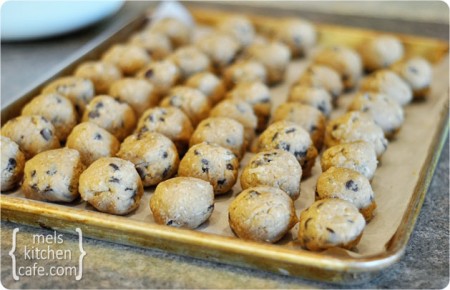
Third, choose a container to use for gift-giving (or freezer storage, waiting for that long-awaited-cookie craving)
Fourth, fill up your chosen container with frozen cookie dough.
Close the lid and attach a label that gives simple instructions for storing and baking.
*The real credit for this genius idea goes to Mel's Kitchen Cafe
*************
Also, try this trick from the Fooducate Blog

I put my finished oatmeal raisin cookie dough into an ice cube tray! And, then I froze them and dumped them out into a freezer bag. Now if I want a fresh baked cookie, I heat up my oven, get out a baking sheet, and bake a reasonable number for my family.
*************
Just Remember Ashley & Sierra's advice about baking frozen cookie dough:
(or just check out this blog post about any possible cookie-baking blunders!
To use frozen dough, set on cookie sheet at room temperature while oven is preheating, 15-20 minutes. It takes the frost off and bakes perfectly.

Saturday, March 31, 2012
How to make Chunky Granola

(2) How To Make Chunky Granola Clusters
I have been making granola nearly every week, since my husband loves it and it makes great gifts for friends and family. But I've been slightly perplexed, until now, as to how to get the granola to clump up. I love chunky, clumpy sheets of granola that hold together until you chop them up. I finally found two significant elements, however, that will help you get deliciously clustered granola!
What You Need
Ingredients
1 batch homemade granola, not yet baked
1 egg white
Equipment
Large baking pan, lined with baking parchment
Small bowl or ramekin
Whisk
Instructions
1. Mix your batch of granola. (We really like this recipe!)
2. Whisk an egg white in a small cup until it is frothy and foamy.
3. Stir the egg white into the granola. Spread the granola out in an even layer on your prepared baking sheet, and bake the granola according to the instructions in your recipe.
4. Take the granola out of the oven and let it cool COMPLETELY, preferably overnight, uncovered. When it cools completely it will be clumpy. If you pour it off the baking sheet while still hot it will break up into loose granola and not get the chance to clump up.
5. When the granola is completely cool, break up into clumpy chunks, and transfer to an airtight container for storage.
Additional Notes:
• The granola in the photos is from Melissa Clark's recipe for Olive Oil Granola.
SOURCE OF THIS ARTICLE: the kitchn
***
For every 6 cups or so of oat mix, whisk together 1/4 cup of canola or olive oil, 1/4 cup brown sugar, and 1/4 cup honey in a small bowl.
Toss this syrup together with the oat mix, spread it out on a sheet pan, and bake at 300° for 45-60 minutes, until the mix is crispy.
Stir occasionally, but delicately - you don't want to break up the granola too much, after all!
We've also noticed that clumpier granola seems to have a higher percentage of oats to other ingredients. Oats stick to each other much easier and more firmly than they do with other, heavier ingredients. If it seems like your mix doesn't have a lot of oats, try adding another cup or two of rolled oats before cooking.
***
Yield: about 8 cups
1 lb. (450g) quick oats*
3 cups (750ml/about 300g) coarsely chopped raw nuts and/or seeds (I usually use a mixture of almonds, hazelnuts and pumpkin seeds, but use whatever tickles your fancy)
1 teaspoon ground cinnamon
1/2 teaspoon ground cardamom
1/2 teaspoon ground mace (or nutmeg)
1 cup, packed (200g) dark brown sugar
1/2 cup (115g/1 stick) unsalted butter
1/3 cup (80ml) water
1/2 teaspoon fine sea salt
2 teaspoons vanilla extract
dried fruit, at your discretion
*if you're not familiar with the difference between quick and regular (also called 'old fashioned') rolled oats, take a look at the pictures here
Preheat the oven to 300F/150C. In a food processor, coffee grinder or blender, grindhalf the oats to a fine powder. In a large bowl, combine the whole oats, ground oats, nuts, seeds and spices. In a microwave-safe bowl (or in a saucepan over medium heat), combine the brown sugar, butter and water and heat just until the butter has melted and the mixture is bubbly. Stir the mixture together until smooth, then stir in the salt and vanilla. Pour this mixture over the oats and nuts, stirring well to coat (I usually do this with my hands). It should be uniformly moist - stir in another tablespoon or two of water if it isn't. Let stand for about ten minutes.
Spread the mixture out on a large baking sheet, separating it into irregular clumps with your fingers, and allowing space between the clumps for the hot air to circulate. Slide into the middle of the oven and bake for 25-30 minutes, or until the top is golden brown. Remove from the oven and stir, gently breaking up the mixture into small-to-medium sized clumps. Return to the oven and bake another 15 minutes or so before stirring again. Repeat the bake-and-stir until the mixture is a uniform golden brown and completely dry; this usually takes 1-1 1/2 hours. Cool completely, then stir in any dried fruit you want to use.
Store in a covered container at room temperature. Serve with milk or plain yogurt and fresh fruit as desired.
SOURCE: http://www.travelerslunchbox.com/journal/2007/6/9/the-lip-ladys-secret-granola.html
Saturday, March 17, 2012
Homemade Spice Blends
Homemade Pizza & Pasta Seasoning Recipe: The Secret to Great-Tasting Dishes
1 Tbsp. rosemary
1 Tbsp. oregano
1 Tbsp. basil
1 Tbsp. peppercorns
½ Tbsp. sea salt
½ Tbsp. garlic salt
½ Tbsp. crushed red pepper
1/2 cup Paprika
1/4 cup cumin
1 tablespoon Fennel Powder
2 Tablespoons Fenugreek powder (optional)- gives sweetness
2 tablespoons Ground Mustard Powder
1 tablespoon ground Red Pepper Flakes (optional)- adds spiciness
3 tablespoons ground coriander (optional)
1/4 cup ground Turmeric root
1 tablespoon ground cardamon (optional)
1 teaspoon cinnamon powder
1/2 teaspoon cloves powder (optional) – Adds complex flavor
1 Tbsp. rosemary
1 Tbsp. oregano
1 Tbsp. basil
1 Tbsp. peppercorns
½ Tbsp. sea salt
½ Tbsp. garlic salt
½ Tbsp. crushed red pepper
To make: Mix well by shaking in a jar or in a food processor. Store in airtight container.
Homemade Curry Powder Recipe:
1/2 cup Paprika
1/4 cup cumin
1 tablespoon Fennel Powder
2 Tablespoons Fenugreek powder (optional)- gives sweetness
2 tablespoons Ground Mustard Powder
1 tablespoon ground Red Pepper Flakes (optional)- adds spiciness
3 tablespoons ground coriander (optional)
1/4 cup ground Turmeric root
1 tablespoon ground cardamon (optional)
1 teaspoon cinnamon powder
1/2 teaspoon cloves powder (optional) – Adds complex flavor
To make: Mix all ingredients in a bowl, jar or food processor and store in an air-tight container until ready to use. Can be used on meats, vegetables or in soups.
Homemade Italian Seasoning:
- 1/2 cup Basil leaf
- 1/2 cup Marjoram Leaf
- 1/2 cup Oregano leaf
- 1/4 cup cut and sifted Rosemary Leaf
- 1/4 cup Thyme leaf
- 2 tablespoons Garlic Powder (optional, especially if you cook with fresh garlic)
To make: Place all herbs in a jar and shake well.
Seasoned Salt Recipe:
- 1/4 cup onion powder
- 1/4 cup garlic powder
- 1/4 cup black pepper (ground)
- 2 tablespoons chili powder
- 3 tablespoons paprika
- 2 tablespoons dried parsley leaf (optional)
- 1 tablespoon ground red pepper flakes (optional)
To make: Mix well by shaking in a jar or in a food processor. Store in airtight container.
Chili Seasoning Mix:
- 1/2 cup chili powder
- 1/4 cup garlic powder
- 3 tablespoons onion powder
- 1/4 cup oregano
- 2 tablespoons paprika
- 1/4 cup cumin
- 1 tablespoon thyme
To Make: mix all ingredients and store in an airtight container. 1/4 cup of mix=1 package of store bought chili seasoning.
Herbs de Provence:
- 1/2 cup thyme leaf
- 1/4 cup marjoram leaf
- 2 tablespoons of cut and sifted rosemary leaf
- 2 tablespoons savory
- 1 teaspoon of lavender flowers (lightly ground-optional)
- 2 teaspoons dried orange zest (optional)
- 1 teaspoon ground fennel
To Make: If you are zesting the orange yourself, remove the zest of one organic orange and dry in an oven on lowest setting or a dehydrator until completely dry. Place in a food processor with the lavender flowers and lightly pulse. Remove and mix all ingredients in a jar or bowl until mixed (do not grind up the herbs!). Excellent in soups, on chicken or on roasted vegetables.
Caribbean Jerk Seasoning:
- 1/4 cup onion powder
- 2 tablespoons sea salt
- 2 tablespoons thyme
- 2 teaspoons ground allspice
- 1 tablespoon cinnamon
- 1 teaspoon cayenne powder (optional)
To Make: mix all ingredients together and store in airtight container. When using, it is especially good if mixed with honey and painted on the meat.
Asian 5-Spice Seasoning:
- 2 tablespoons anise powder
- 1 tablespoon ground pepper
- 1 tablespoon ground fennel
- 1 tablespoon cinnamon
- 1 tablespoon ground cloves
- 1 tablespoon himalayan or sea salt
To Make: Mix all ingredients and store in airtight container.
Pumpkin Pie Spice:
- 1/4 cup cinnamon
- 1 teaspoon ground ginger
- 2 teaspoons nutmeg
- 2 teaspoons allspice powder
- 1/2 teaspoon cloves powder (optional)
To Make: Mix all ingredients and store in airtight container. Use as you would regular pumpkin pie spice.
These and more HERE
Thursday, March 8, 2012
the Paleo Food Guide
Read all about the theory behind the Paleo diet, what to eat, etc.. here:
Saturday, March 3, 2012
Snack Packs

CINNAMON CAYENNE SUNFLOWER SEEDS
When you’re bored with nuts, crunch on this instead. In addition to providing a serious spice kick, the cinnamon helps keep your blood sugar stable, preventing a crash that could send you raiding the cupboard for cookies.
Place 1 cup plus 2 tablespoons shelled sunflower seeds on a baking sheet. Sprinkle with ½ teaspoon cayenne pepper, ¼ teaspoon cinnamon, and ¼ teaspoon sea salt. Bake in a 325F oven until lightly toasted, about 5 to 8 minutes. Remove from oven and toss well. Allow to cool, and divide among 7 plastic baggies.
Per serving: 101 calories, 7 g fat (1.5 g sat), 55 mg sodium, 5 g carbohydrates, 2 g fiber, 4 g protein
When you’re bored with nuts, crunch on this instead. In addition to providing a serious spice kick, the cinnamon helps keep your blood sugar stable, preventing a crash that could send you raiding the cupboard for cookies.
Place 1 cup plus 2 tablespoons shelled sunflower seeds on a baking sheet. Sprinkle with ½ teaspoon cayenne pepper, ¼ teaspoon cinnamon, and ¼ teaspoon sea salt. Bake in a 325F oven until lightly toasted, about 5 to 8 minutes. Remove from oven and toss well. Allow to cool, and divide among 7 plastic baggies.
Per serving: 101 calories, 7 g fat (1.5 g sat), 55 mg sodium, 5 g carbohydrates, 2 g fiber, 4 g protein
DIPPED PRETZELS
These slim sticks satisfy the wickedest cocoa craving without seeming portion-controlled or low-cal. Using pretzels with less than 100 milligrams of sodium per pack will help keep bloat at bay.
Microwave 1/2 cup mini semisweet chocolate chips until just melted, about 1 1/2 to 2 1/2 minutes. Stir well. Dip the ends (about 1/2 inch) of 70 low-sodium mini pretzel sticks into chocolate until coated, then place on a baking sheet lined with parchment paper. Cool at room temperature for 1 hour (or 20 minutes in the refrigerator).
MAKES 7 SERVINGS. Per serving (10 pretzels): 100 cal, 5 g fat (3 sat), 15 g carbs, 96 mg sodium, 1 g fiber, 2 g protein
These slim sticks satisfy the wickedest cocoa craving without seeming portion-controlled or low-cal. Using pretzels with less than 100 milligrams of sodium per pack will help keep bloat at bay.
Microwave 1/2 cup mini semisweet chocolate chips until just melted, about 1 1/2 to 2 1/2 minutes. Stir well. Dip the ends (about 1/2 inch) of 70 low-sodium mini pretzel sticks into chocolate until coated, then place on a baking sheet lined with parchment paper. Cool at room temperature for 1 hour (or 20 minutes in the refrigerator).
MAKES 7 SERVINGS. Per serving (10 pretzels): 100 cal, 5 g fat (3 sat), 15 g carbs, 96 mg sodium, 1 g fiber, 2 g protein
Subscribe to:
Posts (Atom)